We are a highly professional and experienced suppliers of honeycomb machine, honeycomb core machine, honeycomb panel machine in China.
Author: Site Editor Publish Time: 2026-07-17 Origin: Site


The industrial packaging sector is rapidly shifting away from EPS and foam toward sustainable, high-strength alternatives, driving unprecedented demand for paper honeycomb packaging in heavy-duty transit and consumer goods. As demand scales, legacy production equipment frequently becomes a bottleneck. Factories face a critical operational threshold where maintenance costs, material waste, and speed limitations outweigh the capital expenditure of modern machinery. This guide provides an objective, engineering-focused framework for plant managers and operations directors to evaluate when a honeycomb panel line upgrade is financially and operationally justified, detailing evaluation criteria, integration risks, and technological advancements in modern equipment.
Capacity vs. Demand: Upgrading is typically justified when current line speeds cannot meet volume demands without incurring excessive overtime, or when scrap rates exceed baseline industry standards (typically 3–5%).
Technological Shift: Modern lines utilize automated tension control and continuous lamination, significantly reducing the manual intervention and mechanical adjustments required by older honeycomb panel machines.
Integration Options: Facilities must weigh the ROI of retrofitting specific modules against investing in a fully integrated honeycomb core and panel combine line.
Sourcing Execution: Successful upgrades require an exact operational specification document to ensure compatibility with varied paper grades, adhesives, and composite laminate surfaces.
Risk Management: Transition planning must account for facility downtime, operator upskilling, and rigorous vendor evaluation regarding long-term spare parts availability.
Analyze Overall Equipment Effectiveness (OEE) metrics on your existing machinery. Mechanical downtime and slower throughput severely limit overall plant capacity. Legacy machines often require frequent stops for manual web tension adjustments and glue roller cleaning. These micro-stops accumulate, drastically reducing your actual daily output compared to theoretical machine speeds. You must measure the exact gap between your current production volume and your target capacity. Plant managers often notice that older drives and mechanical brakes simply cannot maintain the web tension required for speeds above 30 meters per minute without snapping the kraft paper.
Turning away high-volume contracts due to speed limitations directly damages your market position. When legacy equipment cannot process large orders within tight delivery windows, clients look elsewhere. The financial impact extends beyond a single lost order. It erodes long-term client trust and limits your facility's growth potential in a rapidly expanding sustainable packaging market. You need equipment that runs reliably across three shifts without constant mechanical intervention.
Define the exact performance metrics where transition to a high speed honeycomb lamination line becomes a necessity. Look at your overtime hours, weekend shift requirements, and deferred maintenance schedules. When your facility constantly runs at maximum mechanical capacity just to meet baseline orders, you have crossed the upgrade threshold. Modern automation provides the necessary headroom for scaling operations without linear increases in labor. Upgrading allows you to take on sudden volume spikes from major accounts without panicking your production scheduling team.
Aging lines frequently suffer from cell distortion, delamination, and uneven glue application. Worn bearings and degraded tension control systems cause the paper web to stretch unevenly. This results in crushed honeycomb cells during the expansion phase. Uneven glue application leads to dry spots where the face paper fails to bond with the core, compromising the structural integrity of the final panel. Operators on older lines spend hours tweaking doctor blades and glue gaps, yet still produce panels with weak edge bonding.
Inconsistent panel thickness severely affects downstream processes. Die-cutting, slitting, and printing operations require precise tolerances. When a panel varies in thickness, die-cutters fail to penetrate cleanly, and printers produce distorted images. This increases client rejection rates and forces your quality control team to quarantine large batches of finished goods. Precision is non-negotiable in modern packaging. If your current line produces panels with thickness variations exceeding 1mm, you are likely losing money on downstream processing errors.
Quantify your raw material losses. Manual core expanding and uneven glue application generate significant scrap. Track the tonnage of wasted kraft paper and the volume of excess adhesive consumed per shift. Legacy systems often waste up to 10% of raw materials during startup, shutdown, and changeover phases. Modern automated systems reduce this waste to negligible levels through precise digital controls. You can track these metrics using a simple daily log:
Weigh all scrap paper generated at the unwinding stands.
Measure the volume of adhesive purged during cleaning cycles.
Count the number of rejected panels at the final cutting station.
Calculate the total material cost of these losses weekly.
Agricultural and food-processing packaging increasingly require BRCGS AA food-safe credentials. Older machinery fails to meet these clean-running, dust-controlled standards. Exposed gears, open glue baths, and manual handling introduce contaminants into the packaging material. Modern lines feature enclosed systems, automated washdowns, and stainless-steel contact points to ensure compliance with strict hygiene regulations. You cannot bid on lucrative food-grade contracts if your factory floor is covered in paper dust and stray adhesive.
Logistics-driven demand pushes for varying cell sizes and lighter paper weights. Clients want to achieve a 22% weight reduction compared to solid-core panels to save on shipping fuel. Older machines cannot process lightweight paper without tearing or crushing the core. Upgrading allows you to handle delicate, low-grammage kraft paper while maintaining the high compression strength required for transit. The ability to run 90gsm paper reliably gives you a massive competitive advantage over factories stuck running 140gsm paper just to prevent web breaks.
You lose significant revenue by failing to produce high-density, protective packaging. Heavy goods, automotive dunnage, and furniture protective edging require specialized honeycomb structures. These applications demand thicker panels, smaller cell sizes, and superior crush resistance. Legacy equipment simply lacks the pressing force and drying capacity to manufacture these high-margin industrial products. If your heating section cannot cure the glue on a 50mm thick panel at production speeds, you are locked out of the heavy-duty market.
Older machinery limits your ability to produce panels with precise compression strength. Heavy-industry shippers require packaging with specific energy-dissipating geometry. If your equipment cannot maintain uniform cell shapes under high lamination pressure, the final product will fail drop tests. Upgrading unlocks access to lucrative contracts in the automotive, aerospace, and heavy appliance sectors. These clients demand rigorous testing data, which you can only provide if your manufacturing process is highly controlled and repeatable.
Evaluate the feasibility of upgrading isolated components before committing to a full replacement. You might consider adding a new gluing station, an automated stacker, or a precision cutting unit to your existing line. This targeted approach requires less initial capital and minimizes facility downtime. However, it only solves localized bottlenecks rather than elevating the entire production process. Bolting a new servo-driven cutter onto a line with terrible web tension will just give you precisely cut, badly delaminated panels.
Engineering and software integration present significant challenges when pairing legacy core-expanders with modern lamination units. Old mechanical relays do not communicate easily with new digital sensors. This integration friction often leads to synchronization errors, where the core expands faster than the lamination unit can process it. A successful honeycomb production line upgrade requires seamless communication across all machine sections. If you spend more time troubleshooting communication faults between old and new PLCs than you do running production, the retrofit has failed.
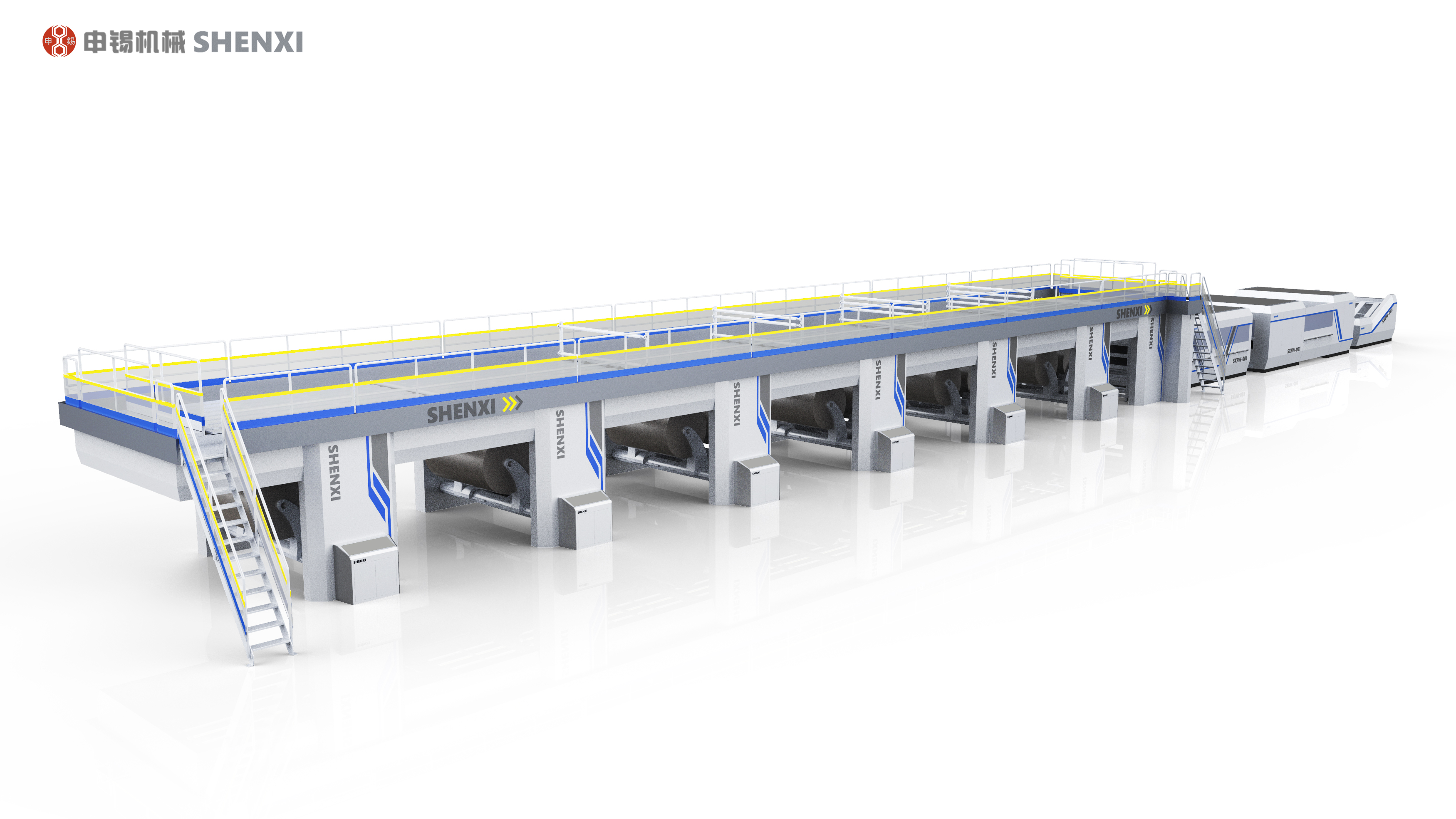
A continuous combine line seamlessly transitions from core expansion to panel lamination. This single, automated process eliminates the need to manually transport expanded core between separate machines. The continuous web tension ensures uniform cell geometry from the expansion rack through the gluing rollers and into the pressing section. This is the standard for high-volume, defect-free manufacturing. You eliminate the entire WIP (Work in Progress) inventory of expanded core sitting on your factory floor absorbing ambient humidity.
A unified system drastically reduces manual labor and optimizes your physical footprint. Instead of dedicating floor space to storing unlaminated expanded core, the integrated line processes raw paper rolls directly into finished panels. This streamlines your material flow and reduces forklift traffic on the factory floor. Investing in a honeycomb core and panel combine line maximizes your output per square meter. You can reallocate the floor space previously used for core storage to finished goods staging or additional converting equipment.
An integrated line eliminates core deformation risks. Transporting and storing unlaminated expanded core exposes it to moisture and physical damage. By laminating the core immediately after expansion, you lock the cell structure in place. This guarantees output consistency and ensures every panel meets strict compression strength specifications. The immediate application of face paper stabilizes the hexagonal structure before it has any chance to relax or distort.
Programmable Logic Controllers (PLCs) and sensor integration define modern manufacturing. Real-time tension monitoring automatically adjusts brake pressure on the unwinding stands to prevent paper tears. Automated defect detection systems use optical sensors to identify dry spots or crushed cells before the panel reaches the cutting station. This immediate feedback loop prevents large batches of defective products. Operators monitor the entire line from a single HMI screen, adjusting parameters on the fly without stopping the machine.
Data-logging capabilities assist in predictive maintenance. Smart sensors track vibration levels in bearings and temperature fluctuations in drying units. This data allows your maintenance team to replace wearing parts before they cause unplanned downtime. Furthermore, digital tracking accurately measures material yield per run, giving you precise control over your production efficiency. You can finally tie specific material batches to exact production runs for complete traceability.
You must evaluate manufacturer speed claims against practical limits. A machine rated for 50 meters per minute is useless if the glue fails to cure at that speed. Verify the length of the drying section and the pressing time. High-speed production requires advanced adhesive application and rapid curing technologies to ensure the face paper bonds permanently to the core. Ask vendors to demonstrate their claimed speeds using your specific paper grades and adhesive formulations.
The energy-dissipating geometry of the honeycomb cells must be preserved at high speeds. If the lamination pressure is too high or the web tension fluctuates, the cells will lean or crush. Finished panels must achieve the target 25% reduction in transit damage rates for fragile end-user components. Speed must never compromise structural integrity. A fast line that produces leaning cells will cost you clients faster than a slow line that produces perfect panels.
Evaluate the machine's ability to handle different paper grades. You need the flexibility to run virgin kraft for high-strength applications and high-percentage recycled paper for standard packaging. The unwinding and tensioning systems must adapt to different paper tensile strengths without tearing the web or losing tension during splicing. Test the machine's ability to handle paper with high moisture content, as recycled grades often absorb ambient humidity differently than virgin kraft.
Assess the system's capability to process composite sandwich panels. Specialized industrial packaging often combines paper honeycomb cores with alternative face materials like non-woven fabrics, plastics, or wood veneers. A versatile honeycomb panel machine features adjustable gluing stations and pressing units capable of handling different material thicknesses and adhesive requirements. This versatility allows you to pivot into new markets without buying entirely new production lines.
Changeover efficiency dictates your operational agility. Assess the time required for tooling and parameter changes when switching between different core cell sizes or panel thicknesses. Modern machines utilize motorized adjustments and saved PLC recipes to reduce changeover times from hours to minutes. This flexibility allows you to handle smaller, customized production runs profitably. Consider these changeover factors:
Time required to swap core expansion gears.
Automated adjustment of the glue gap for different paper weights.
Speed of adjusting the cutting unit for new panel lengths.
Time needed to purge and clean the adhesive system.
Write a rigorous operational specification document for your new equipment. Define strict tolerances for panel flatness, cut-to-length accuracy, and moisture control. Specify the exact range of paper weights and panel thicknesses you intend to produce. A detailed blueprint ensures the vendor designs a machine tailored to your exact production reality. Do not rely on standard vendor brochures; demand a custom engineering proposal based on your specific product mix.
Establish specifications for cold glue versus hot melt systems. Cold glue requires longer pressing and drying times but offers superior rigidity for heavy-duty panels. Hot melt provides instant adhesion for high-speed lightweight panel production. Your RFP must clearly state your target curing times and bonding strength requirements so the vendor can supply the appropriate adhesive application system. Some advanced lines incorporate hybrid gluing systems to handle both types of adhesive depending on the production run.
Feature | Legacy Honeycomb Lines | Modern Automated Lines |
|---|---|---|
Tension Control | Manual mechanical brakes | Automated closed-loop servo control |
Drying Efficiency | High heat loss, slow curing | Targeted IR or recirculating hot air |
Changeover Time | 1 to 3 hours (manual adjustment) | 10 to 15 minutes (PLC recipes) |
Defect Detection | Visual inspection by operators | Inline optical sensors and auto-rejection |
Outline realistic timelines for decommissioning old equipment, site preparation, installation, and commissioning. A full line replacement typically requires several weeks of downtime. You must prepare the foundation, upgrade electrical panels, and install new extraction systems before the new machinery arrives. Coordinate closely with the vendor's installation team to prevent costly delays. Ensure your factory floor can handle the weight and footprint of the new equipment, including the necessary clearance for forklift access to the unwinding stands.
Build inventory buffers before taking your legacy line offline. Run maximum capacity shifts in the months leading up to the installation to stockpile finished panels for your key clients. Alternatively, outsource production to partner plants during the transition period. Maintaining a seamless supply chain during installation is critical to preserving client relationships. Communicate the upgrade schedule to your major accounts well in advance so they can adjust their ordering patterns accordingly.
Address the skills gap between operating mechanical legacy systems and modern, software-driven machines. Your operators must transition from turning wrenches to navigating touch-screen HMI panels. They need to understand digital tension readouts, fault codes, and automated recipe management. Do not underestimate the time required for this mental shift. A machine is only as fast as the operator running it.
Structure vendor contracts to include comprehensive on-site training. Demand shadowing periods where vendor technicians operate the machine alongside your staff. Require detailed, customized standard operating procedure (SOP) documentation. Proper training minimizes the adoption curve and prevents operator errors from damaging the new equipment during the first few months of operation. Create a certification program for your operators to ensure they fully understand the safety protocols and maintenance routines of the new line.
Establish strict criteria for vetting equipment manufacturers. Prioritize vendors with local parts warehousing and remote diagnostic capabilities. When a machine goes down, you need immediate support. Remote diagnostics allow vendor engineers to log into your PLC securely and troubleshoot software issues without waiting for a technician to travel to your facility. Ask for references from other factories running the same equipment to verify the vendor's response times.
Warn against proprietary components that lock your factory into expensive, single-source maintenance contracts. Advocate for open-architecture industrial components. Ensure the machine uses standard bearings, motors, and sensors available from multiple industrial suppliers. This protects your operation from supply chain disruptions and keeps long-term maintenance costs manageable. Review the spare parts list provided by the vendor and identify any items that have lead times longer than two weeks.
Audit your current OEE and document exact material waste percentages over a 30-day period.
Draft a precise operational specification document detailing required paper grades, panel dimensions, and compliance standards.
Request physical panel samples produced at maximum rated speeds from shortlisted machinery vendors.
Develop a comprehensive inventory buffer plan to maintain client deliveries during the installation window.
A: Your line is too slow if you consistently require overtime to meet baseline orders, or if you must decline high-volume contracts due to lead time constraints. Frequent mechanical micro-stops also indicate your equipment can no longer maintain efficient production speeds.
A: Yes, modular retrofitting is possible. However, pairing a modern, high-speed gluing section with a legacy core expander often causes synchronization issues. A fully integrated line generally provides better long-term reliability and output consistency.
A: Modern automated lines typically maintain a scrap rate of 3% to 5%. If your current legacy equipment produces waste exceeding 8% to 10%, an upgrade will yield significant raw material savings.
A: Modern high-speed lines often require adhesives with faster curing times. Depending on your production speed and panel specifications, you may need to switch to optimized cold glue formulations or integrate hot melt systems for instant adhesion.
A: Installation and commissioning typically take between two to four weeks, depending on site preparation and machine complexity. You must build inventory buffers to cover this downtime and ensure uninterrupted supply to your clients.