We are a highly professional and experienced suppliers of honeycomb machine, honeycomb core machine, honeycomb panel machine in China.
Author: Site Editor Publish Time: 2026-07-28 Origin: Site


Rough edges, cell crushing, and tearing during honeycomb panel processing directly result in material waste, compromised structural integrity, and rejected batches. Achieving a clean cut on cellular paper structures requires a delicate balance of blade geometry, web tension, and feed speed. When edge defects become chronic, manufacturers face a diagnostic challenge: is it a temporary calibration error, or a fundamental limitation of the current cutting equipment?
This guide breaks down the mechanical causes of rough edges in honeycomb panels, provides diagnostic frameworks for your current setup, and outlines the technical criteria for evaluating a high-performance honeycomb panel slitting machine capable of eliminating these defects.
Blade and Tension Dynamics: The majority of rough edges stem from incorrect top knife overlap, excessive web tension, or blade passivation (wear).
Material and Environmental Variables: Uneven material hardness, seasonal moisture fluctuations, and biological degradation (mold/fungus) of paper cores exacerbate cutting inconsistencies, requiring adaptive machine pressure.
Structural Failures: Poor cutting causes the honeycomb core in the beveled area to crush and shear, leading to a loss of face sheet support and large areas of depression.
Equipment Limitations: Legacy machines often lack the automated tension control, multi-pass depth configurations, and precise pressure regulation required to prevent cell crushing.
Upgrade Criteria: Transitioning to a modern slitting and cross machine requires evaluating automated feed rates, blade bevel specifications, and structural support mechanisms to guarantee clean edge-closed panels.
A precision cut requires zero cell deformation, no delamination of the face paper, and a clean, perpendicular edge ready for edge-banding or final assembly. Operators must differentiate between a crushed core and a torn edge. Crushing usually results from excessive downward pressure or blunt tools. Tearing happens due to improper speed ratios or lateral tension. When you push a dull blade through a rigid paper matrix, the cellular walls buckle before they sever. This buckling propagates downward, destroying the structural integrity of the panel far beyond the immediate cut line.
Face-paper splintering and fuzzing often occur when the top veneer or paper linerboard splinters during high-speed cutting. This is typically a result of dull tooling or incorrect cutting angles. The beveled area shear phenomenon is another critical issue. Crushing and shearing of the honeycomb core in the beveled zone causes face sheets to lose structural support, forming large areas of depression. You will notice this defect immediately when applying edge banding, as the banding material will have nothing solid to adhere to, resulting in a wavy, unacceptable finish.
Material hardness and environmental factors play a massive role. Variations in paper density, recycled fiber content, ambient humidity, and storage conditions affect the shear strength of the honeycomb panel. Seasonal temperature extremes, mold, or moisture absorption can drastically alter how the material responds to cutting pressure. Paper is highly hygroscopic. When the moisture content of the kraft paper exceeds optimal levels, the fibers swell and lose their rigidity. Instead of snapping cleanly under the blade, they bend and tear, leaving a ragged edge that requires manual sanding or complete rejection.
Understanding the physics of the cut is the first step in diagnosing edge defects. The blade must act as a wedge, separating the material at a microscopic level. If the wedge is too wide (incorrect bevel) or moving at the wrong speed relative to the material, the forces shift from shearing to crushing. This is why maintaining strict control over both the tooling and the material environment is non-negotiable for high-yield production.
Blade geometry and top knife overlap are frequent culprits. An incorrect top knife blade bevel alters the cutting angle, leading to material displacement rather than a clean shear. Excessive top knife overlap causes unnecessary friction, heat buildup, and edge fraying. When the top and bottom knives overlap too much, they create a scissor effect that can pull the delicate paper fibers rather than slicing them. This pulling action is a primary cause of the fuzzing seen on the top linerboard.
Inconsistent web tension and feeding speeds also destroy edge quality. Asynchronous feed rates cause splintering on the top veneer or paper layer. Excessive web tension pulls the material apart before the blade fully severs the core. If the pull rollers are running even slightly faster than the cutting section, the panel is under tension. The moment the blade weakens the core, the tension rips the remaining fibers apart. This creates a jagged, unpredictable edge profile.
Single-pass overload is a mechanical limit when cutting through dense cores. Forcing a blade through thick panels without incremental scoring causes severe edge blowout. Tool wear and passivation are inevitable in high-volume paper honeycomb processing. Cheap, low-grade bits or worn cutting tools increase the required cutting pressure, inevitably leading to a poor cutting effect. As a blade dulls, the surface area contacting the paper increases. This requires more force to penetrate the material, which directly translates to higher compression forces on the honeycomb cells.
To systematically identify the root cause of rough edges on your equipment, follow this diagnostic sequence:
Isolate the material variable by running a test cut on a known, climate-controlled batch of honeycomb panels to rule out moisture issues.
Inspect the top knife overlap using a feeler gauge to ensure it matches the manufacturer's exact specifications for the current panel thickness.
Examine the blade edge under magnification to check for micro-fractures or passivation that would indicate immediate replacement is necessary.
Measure the feed speed against the blade rotation speed using a tachometer to verify synchronization.
Perform a step-cut test, reducing the depth of the cut by 50% to see if single-pass overload is causing the cell crushing.
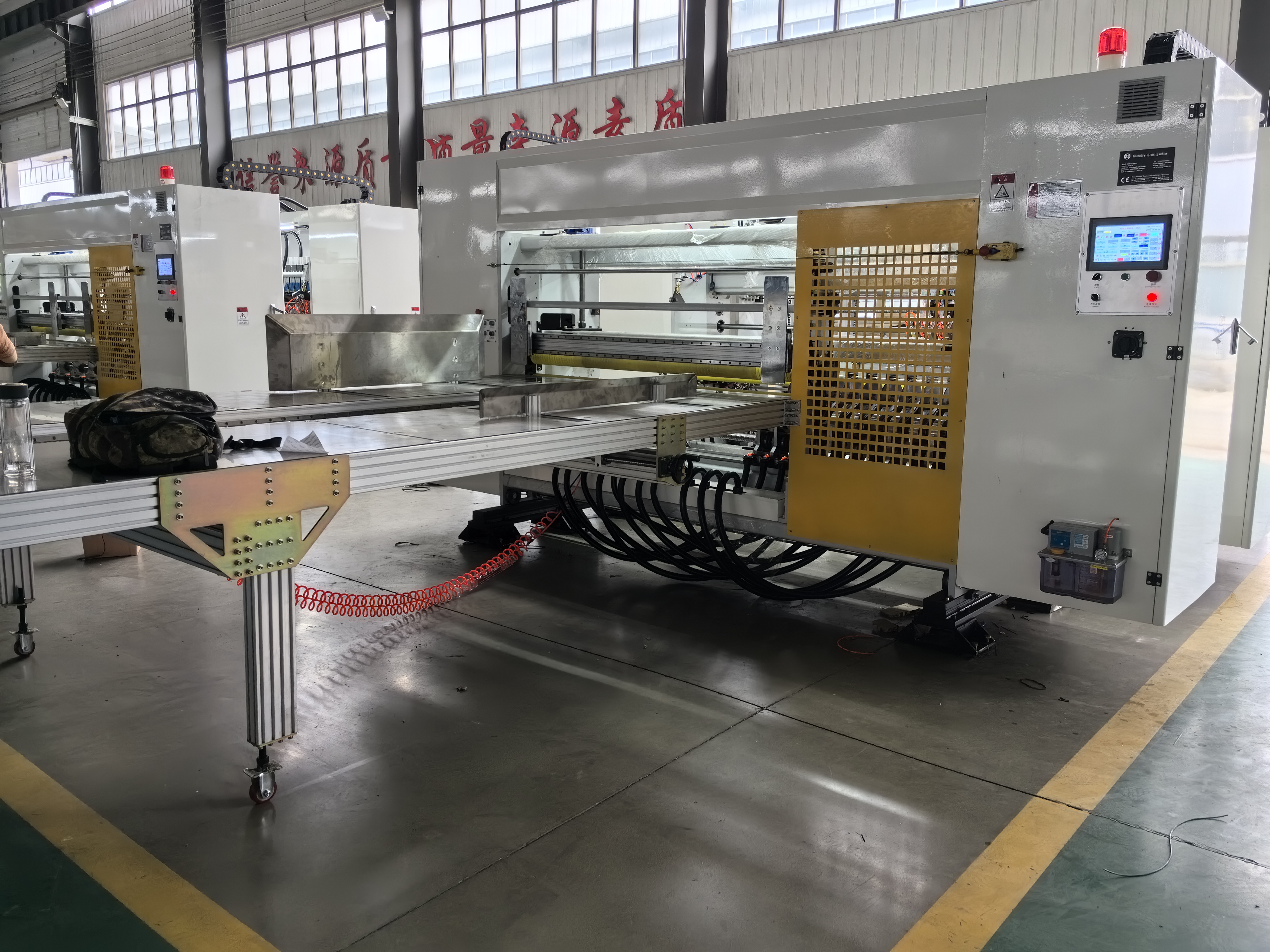
Operators must understand the calibration limits of legacy equipment. Establish a framework for determining if rough edges can be resolved via maintenance. This includes slowing down cutting speed, replacing cheap bits, reducing material removal per pass, or adjusting environmental storage conditions. Identify when manual adjustments are no longer sufficient to maintain production quotas without sacrificing quality. If your maintenance team is spending more than two hours a shift adjusting blade tension and feed rates just to keep scrap rates acceptable, the machine has exceeded its operational lifespan.
Knowing when to invest in a high speed honeycomb slitting machine requires a hard look at your production data. Evaluate the hidden costs of rough edges, such as rework, material scrap, and downstream assembly failures. Legacy machines rely heavily on mechanical linkages and manual dials. These systems degrade over time, introducing slop and vibration into the cutting process. Vibration is the enemy of a clean cut. When the blade chatters against the paper core, it creates a micro-serrated edge that ruins the panel's structural integrity.
Modern equipment replaces these mechanical linkages with direct-drive servo motors and rigid, cast-iron frames that absorb vibration. The decision to upgrade should be based on a clear analysis of your current scrap rates and the labor hours wasted on rework. If you are throwing away 5% of your panels due to edge defects, calculate the annual cost of that wasted material. In many cases, the material savings alone justify the capital expenditure of new machinery within a short timeframe.
Automated tension and speed control systems are non-negotiable. Servo-driven motors synchronize blade speed with material feed rates to prevent tearing. Dynamic tension controllers adapt to minor variations in paper honeycomb thickness, density, and moisture content. These systems use load cells and encoders to monitor the material in real-time, making micro-adjustments to the feed rollers to maintain perfect tension across the entire length of the panel.
Precision blade and tooling configurations separate adequate machines from exceptional ones. Look for machines that offer micro-adjustments for blade bevel, overlap, and cutting pressure. High-grade, wear-resistant steel blades are necessary to delay passivation and maintain a sharp cutting edge over extended runs. Tungsten carbide inserts or specialized coatings can extend blade life significantly, reducing downtime for tool changes and ensuring consistent cut quality shift after shift.
Material support and edge-closed stability are critical. Advanced paper honeycomb panel slitting machine models support the honeycomb core in the beveled area during the cut to prevent crushing and shearing. Integration of cross-cutting capabilities on a unified slitting and cross machine maintains edge integrity across both the X and Y axes. This unified approach eliminates the need to move panels between different machines, reducing handling damage and ensuring perfect squareness.
Feature | Mechanical Function | Direct Impact on Edge Quality |
|---|---|---|
Servo-Driven Speed Control | Synchronizes blade rotation with linear feed rates | Prevents tearing and splintering of the face paper |
Dynamic Tension Controllers | Adapts roller pressure to material variations | Reduces web tension defects and core stretching |
Micro-Adjustable Blade Bevel | Optimizes the cutting angle for specific paper densities | Minimizes material displacement and cell crushing |
Integrated Material Support Anvils | Stabilizes the beveled area directly beneath the cut line | Prevents core shearing and maintains panel thickness |
Automated Depth Profiling | Allows for multi-pass scoring before the final severing cut | Eliminates edge blowout on exceptionally thick panels |
Balancing cutting speed with edge quality is a constant trade-off. Maximizing throughput on a high-speed line must not compromise the strict tolerances required for premium panels. Pushing a machine beyond its rated capacity will inevitably result in increased vibration and accelerated tool wear. You must establish a baseline operating speed that delivers acceptable edge quality and lock those parameters into the machine's control system to prevent operators from overriding them to meet arbitrary production targets.
Operator training and machine calibration mitigate risks. Even the best machinery requires skilled operators to set correct parameters for different panel thicknesses and environmental conditions. Vendor-provided training and accessible diagnostic software are essential. Operators need to understand the relationship between paper moisture content and cutting pressure. They must be trained to recognize the early signs of blade passivation and empowered to halt production to change tooling before scrap is generated.
Maintenance schedules and tooling costs must be factored into your operational planning. The ongoing cost of premium replacement blades is often offset by the savings gained from reduced material waste. Implementing a strict preventative maintenance program that includes daily cleaning of the cutting area, weekly lubrication of linear guides, and monthly calibration of the tension control systems will ensure the machine continues to deliver precision cuts years after installation.
Audit your current scrap rates attributed specifically to edge defects and calculate the annual material loss.
Document your specific material variables, including paper density, core cell size, and average facility moisture levels.
Request a technical demonstration or test cut from a qualified machinery manufacturer using your actual production materials.
Establish a strict, documented blade inspection and replacement schedule based on linear meters cut rather than arbitrary timeframes.
A: Crushing is typically caused by excessive cutting pressure, a blunt blade (passivation), or a lack of structural support beneath the panel's beveled area during the cut.
A: Excessive web tension stretches the paper fibers, causing them to tear rather than shear cleanly when the blade makes contact, resulting in a frayed or rough edge.
A: Yes. Feeding the material too fast relative to the blade speed forces the blade to tear through the material, while feeding too slowly can cause friction buildup and edge distortion.
A: The ideal bevel depends on the density and thickness of the paper core, but it must be acute enough to slice without displacing the delicate cellular structure. Incorrect bevels lead to material compression.
A: Blade lifespan varies based on production volume and material hardness. Blades should be inspected daily and replaced or sharpened at the first sign of passivation to prevent edge degradation.
A: Yes. High humidity softens paper honeycomb, making it more prone to tearing and crushing, which may require adjustments to cutting speed and blade pressure.