We are a highly professional and experienced suppliers of honeycomb machine, honeycomb core machine, honeycomb panel machine in China.
Author: Site Editor Publish Time: 2026-01-26 Origin: Site


Honeycomb panels are revolutionizing industries that need lightweight yet strong materials. With their excellent strength-to-weight ratio, they provide an ideal solution for applications where weight reduction is crucial without compromising structural integrity.
In this article, we will explore why honeycomb panels are so widely used in lightweight design. We’ll focus on their unique advantages, versatility in various industries, and their environmental benefits. Shenxi Honeycomb plays a key role in providing high-quality, sustainable honeycomb solutions to meet these needs.
Honeycomb panels are made up of a unique hexagonal core structure that maximizes strength while minimizing weight. This structure is often compared to a beehive, where the honeycomb cells distribute the applied load evenly. The core is typically sandwiched between two flat outer layers, which further enhance the panel's strength and stability.
Materials used for honeycomb panels vary based on the application. Common options include aluminum for its strength and durability, paper for its lightness and eco-friendliness, and thermoplastics for flexibility and corrosion resistance. This variety in materials allows honeycomb panels to be tailored to meet specific needs in different industries.
Material Type | Common Applications | Benefits |
Aluminum | Aerospace, automotive | High strength, lightweight, durable |
Paper | Packaging, lightweight furniture | Eco-friendly, cost-effective |
Thermoplastics | Specialized applications (e.g., marine, automotive) | Flexibility, corrosion resistance |
This structure and material combination makes honeycomb panels ideal for a wide range of industries, where strength and weight reduction are critical.
The process of manufacturing honeycomb panels begins with the creation of the core, which is then coated with face sheets made of metal, plastic, or other materials. The core is made using either a paper or metal process that involves creating a series of cells, which are then bonded together to form a panel. This manufacturing process ensures that the panel maintains both strength and lightness.
At Shenxi Honeycomb, advanced manufacturing techniques are used to ensure high-quality honeycomb panels with superior durability and precision. The company emphasizes quality control to guarantee that each panel is up to the high standards required for various industrial applications.
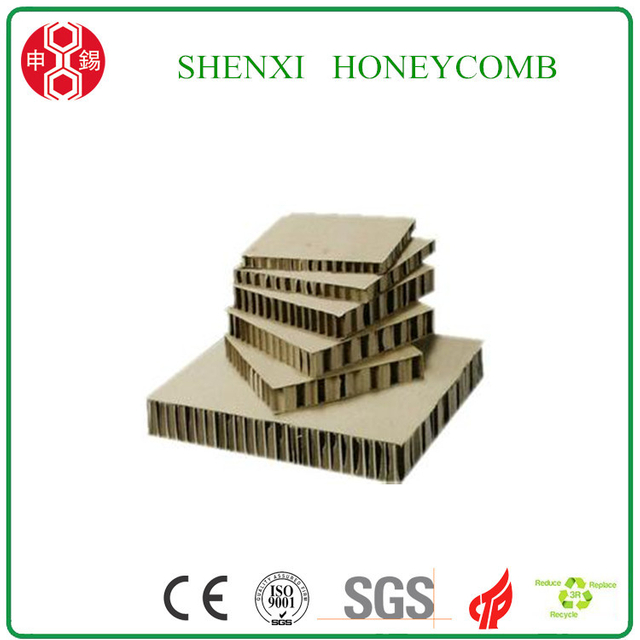
One of the main reasons honeycomb panels are so widely used is their excellent strength-to-weight ratio. The honeycomb structure allows the material to support significant loads without adding excessive weight. This makes them an ideal choice for industries such as aerospace, automotive, and construction, where every kilogram saved is crucial for efficiency.
In comparison to traditional solid materials, honeycomb panels can provide the same or even greater strength while being significantly lighter. For instance, aluminum honeycomb panels can withstand heavy loads without compromising on weight, making them essential for applications where strength is critical, such as in the aerospace industry.
Material Type | Strength-to-Weight Ratio | Application |
Honeycomb Panels | High | Aerospace, automotive, construction |
Solid Materials | Moderate to High | Heavy-duty applications |
The strength-to-weight ratio of honeycomb panels is a major factor in their widespread use across industries that prioritize performance without compromising on weight.
Honeycomb panels are particularly effective in structural applications where weight reduction is critical. In aerospace, for example, they are used in aircraft panels, where the combination of light weight and high strength is necessary for fuel efficiency and safety. In the automotive industry, honeycomb panels are used to reduce the weight of vehicle body parts, enhancing fuel efficiency without compromising performance.
Similarly, in the construction industry, honeycomb panels are used in facades, walls, and ceilings, where their light weight and structural integrity make them ideal for both residential and commercial buildings. Honeycomb panels are also widely used in transport vehicles such as trains and ships to reduce overall weight and improve performance.
The lightweight nature of honeycomb panels leads to significant savings in transportation costs. Because they are lighter than traditional materials, honeycomb panels reduce the overall weight of the products being shipped, lowering freight charges. Additionally, their efficient manufacturing process helps keep costs low while still providing a high-performance product.
Moreover, honeycomb panels are easy to handle and require less energy to transport, which further reduces the costs associated with logistics and shipping. This cost-effectiveness makes them an attractive choice for industries where both performance and budget constraints are important.
In aerospace, reducing weight is crucial for improving fuel efficiency. Honeycomb panels are widely used in aircraft components such as fuselages, wings, and interior panels. Their lightweight nature helps to reduce the overall weight of the aircraft, leading to lower fuel consumption and reduced operational costs.
At the same time, honeycomb panels offer exceptional strength, which ensures the structural integrity of the aircraft. This balance of strength and weight makes them ideal for meeting the high demands of the aerospace industry, where safety is paramount, and performance is key.
The automotive industry, especially with the rise of electric vehicles, requires materials that offer strength without adding unnecessary weight. Honeycomb panels are used in vehicle body parts and interior components to reduce overall vehicle weight, which in turn enhances fuel efficiency and performance.
Reducing weight in cars leads to lower energy consumption and better handling, both of which are critical for performance. Honeycomb panels are particularly valuable in electric vehicles, where the reduction in weight directly improves the range and efficiency of the vehicle.
Industry | Application | Key Benefits |
Aerospace | Aircraft fuselages, wings, and interior panels | Reduces weight, improves fuel efficiency, maintains structural integrity |
Automotive | Vehicle body parts and interior components | Enhances fuel efficiency, improves vehicle handling, reduces energy consumption |
Honeycomb panels are widely used in the construction industry for both facades and interior applications. Their lightweight yet durable nature makes them perfect for creating partition walls, ceilings, and other structural components that need to be both strong and light. The aesthetic appeal of honeycomb panels is also notable, as they provide a modern and sleek design for architectural projects.
The use of honeycomb panels in building facades is particularly advantageous, as they help reduce the overall weight of the structure. This makes the panels easier to handle and install, leading to faster construction times. Despite their lightness, honeycomb panels maintain excellent strength and integrity, ensuring the building's durability. Their ability to combine strength and lightweight properties helps streamline the construction process while maintaining high performance.
Honeycomb panels are a great choice for sustainable construction projects. Their ability to be made from recycled materials and their recyclability at the end of their life cycle contribute to a more sustainable building process. Additionally, honeycomb panels help to improve energy efficiency in buildings, as they can be used as insulation material, reducing the need for additional energy consumption.
In addition to their recyclability, honeycomb panels can help improve energy efficiency in buildings. In green building projects, honeycomb panels are crucial for meeting environmental goals, as they help reduce the carbon footprint of construction while contributing to a more sustainable and eco-friendly building design.
Application Area | Honeycomb Panel Benefits | Examples of Use |
Construction | Lightweight, durable, modern design | Facades, partition walls, ceilings |
Sustainability | Recyclable, eco-friendly, energy-efficient | Green building projects, insulation |
Honeycomb panels are widely used in packaging due to their ability to protect fragile items during shipping. Their lightweight and shock-absorbing properties make them ideal for ensuring the safety of delicate goods. Whether it’s electronics, glassware, or other fragile items, honeycomb panels offer a cost-effective and efficient solution for protective packaging.
In the logistics industry, honeycomb panels help reduce shipping costs by minimizing weight while ensuring products arrive undamaged. This makes them a popular choice for e-commerce businesses that need reliable and affordable packaging solutions.
Honeycomb panels are used in furniture design to create lightweight yet strong components. From tables and chairs to cabinet cores and doors, honeycomb panels provide the necessary strength while minimizing the weight of the furniture. This makes them easier to handle and transport, and also contributes to more sustainable furniture production by using eco-friendly materials.
Honeycomb panels offer a modern and sleek design in furniture production, making them a popular choice for both residential and commercial spaces.
Application Area | Honeycomb Panel Benefits | Examples of Use |
Packaging | Lightweight, shock-absorbing, cost-effective | Packaging for electronics, glassware |
Furniture | Lightweight, strong, sleek design | Tables, chairs, cabinet cores, doors |
Honeycomb panels are known for their sustainability, particularly when made from recyclable materials such as paper or aluminum. This makes them an eco-friendly choice for industries looking to minimize their environmental footprint. Additionally, the manufacturing process for honeycomb panels typically requires less energy than producing solid materials, contributing to a lower carbon footprint.
At Shenxi Honeycomb, a strong commitment to sustainability is reflected in the use of high-quality, recyclable materials in all their honeycomb panel products. This ensures that industries can meet their sustainability goals without sacrificing performance. Whether it's reducing waste or lowering energy consumption, Shenxi Honeycomb provides eco-friendly solutions that help businesses minimize their environmental impact.
The lightweight nature of honeycomb panels directly contributes to reducing the carbon footprint in industries like transportation and construction. By reducing the weight of products and materials, honeycomb panels help cut down on energy consumption during transportation. This leads to lower greenhouse gas emissions and less fuel consumption, making honeycomb panels a key material for industries aiming to reduce their environmental impact.
Feature | Honeycomb Panels | Impact |
Recyclability | Made from paper, aluminum, and other recyclable materials | Eco-friendly, supports a circular economy |
Manufacturing Process | Lower energy consumption compared to solid materials | Reduces carbon footprint in production |
Weight Reduction | Lightweight, reduces transportation weight | Leads to lower energy consumption and greenhouse gas emissions |
Sustainability | Fully recyclable, contributes to green building projects | Helps industries achieve sustainability goals |
Honeycomb panels have become an essential material in lightweight design, offering an ideal balance of strength, versatility, and sustainability. Their applications span industries like aerospace, automotive, construction, and packaging, where their unique properties make a significant impact. Whether reducing weight, improving performance, or supporting sustainability goals, honeycomb panels provide a solution for modern design needs.
With Shenxi Honeycomb's high-quality honeycomb solutions, industries can harness these benefits to ensure top-tier performance and reduced environmental impact. Businesses looking to optimize both design and environmental efficiency should consider honeycomb panels for their production processes.
A: Honeycomb panels are materials with a unique hexagonal core structure. They are widely used in lightweight design because they offer strength without excessive weight, making them ideal for industries like aerospace, automotive, and construction.
A: Honeycomb panels reduce the weight of structures while maintaining strength. They also act as insulation, helping buildings save energy by reducing the need for additional heating or cooling.
A: Honeycomb panels are crucial in aerospace and automotive industries due to their ability to reduce weight while ensuring strength. This improves fuel efficiency, performance, and safety.
A: Honeycomb panels are typically made from materials such as aluminum, paper, or thermoplastics. These materials are chosen for their specific benefits, like durability, eco-friendliness, and flexibility.
A: Honeycomb panels are lightweight, which reduces the overall weight of products during shipping. This leads to lower freight charges and decreased energy consumption, making them cost-effective for logistics.
A: Honeycomb panels are made from recyclable materials, making them eco-friendly. Their lightweight nature also reduces carbon emissions during transportation, contributing to a lower environmental impact.