We are a highly professional and experienced suppliers of honeycomb machine, honeycomb core machine, honeycomb panel machine in China.
Author: Site Editor Publish Time: 2025-10-22 Origin: Site


Honeycomb cardboard panels are becoming increasingly popular across various industries due to their remarkable strength, versatility, and eco-friendliness. These panels, made by sandwiching a honeycomb core between two layers of cardboard, offer a range of benefits that make them a go-to solution for packaging, construction, and interior design applications. Understanding the advantages of honeycomb cardboard panels can help businesses and individuals make informed decisions when selecting materials for their projects. In this article, we’ll explore why honeycomb cardboard panels are an excellent choice for a wide variety of uses.
One of the most significant advantages of honeycomb cardboard is its impressive strength-to-weight ratio. The honeycomb structure, with its geometric design, provides high tensile strength while remaining incredibly lightweight. This makes honeycomb cardboard panels an ideal choice for applications where weight is a concern, such as in packaging or lightweight construction materials.
The honeycomb core within the cardboard panel acts as a structural support system, distributing stress evenly across the surface. This ensures that the panel is resistant to bending or compression while being much lighter than other materials like solid wood or metal.
Benefits of Honeycomb Cardboard’s Strength-to-Weight Ratio:
| Benefit | Explanation |
|---|---|
| Increased Efficiency | Lightweight panels reduce transportation costs and ease handling. |
| Durability | Strong enough to withstand impacts and heavy loads without sacrificing weight. |
| Energy Savings | Reduced weight in transportation leads to lower fuel consumption. |

In today’s world, sustainability is a major concern for both businesses and consumers. Honeycomb cardboard panels are an environmentally friendly option that can significantly reduce the carbon footprint of a product. These panels are made from recyclable materials and are biodegradable, which means they contribute less to landfill waste compared to plastic or metal alternatives.
The cardboard used in honeycomb panels is typically made from recycled paper, which reduces the need for new raw materials. Furthermore, since the honeycomb structure is highly efficient, less material is required to achieve the same strength as other traditional materials.
Environmental Benefits of Honeycomb Cardboard:
| Benefit | Explanation |
|---|---|
| Recyclable | Made from 100% recyclable materials, reducing waste in landfills. |
| Biodegradable | The cardboard breaks down naturally, minimizing environmental impact. |
| Lower Carbon Footprint | Manufacturing requires less energy and fewer resources compared to alternatives. |
Honeycomb cardboard panels are used in a wide range of industries, thanks to their adaptability. From packaging and logistics to construction and furniture design, honeycomb cardboard offers a versatile solution for numerous applications.
In packaging, honeycomb cardboard panels provide excellent protection for fragile items. Their lightweight yet durable structure ensures that goods are safely transported while reducing shipping costs. Honeycomb cardboard is also used in protective corner padding, interleaving layers, and as an alternative to plastic-based packaging materials.
In construction, honeycomb cardboard panels are often used in lightweight wall panels, partitioning systems, and flooring. They are easy to install and offer high insulation properties. In interior design, the panels are used for furniture, decorative pieces, and even temporary installations, providing both aesthetic appeal and functional utility.
Industry Applications of Honeycomb Cardboard:
| Industry | Application |
|---|---|
| Packaging | Protective packaging for delicate items, reducing shipping costs. |
| Construction | Lightweight partitions, wall panels, and flooring. |
| Furniture Design | Custom furniture and interior decor, offering aesthetic and functional benefits. |
When compared to traditional building materials like metal, plastic, or solid wood, honeycomb cardboard panels are more cost-effective. Despite their strength and durability, the production process for honeycomb cardboard panels is relatively simple, which keeps costs down.
The production of honeycomb cardboard involves relatively low manufacturing costs due to the simplicity of the materials used. Additionally, because the panels are lightweight, they reduce transportation expenses, making them an even more economical choice for both manufacturers and consumers.
Cost-Effectiveness in Practice:
| Factor | Explanation |
|---|---|
| Lower Material Costs | The manufacturing process is less expensive compared to alternatives. |
| Reduced Shipping Costs | Lightweight panels reduce transportation expenses. |
| Efficiency Gains | Panels are durable enough to reduce the need for replacements. |
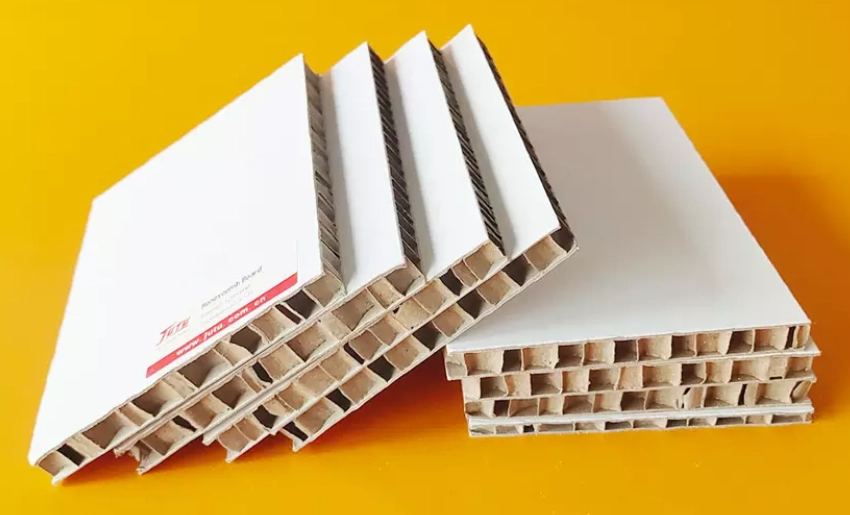
Honeycomb cardboard panels also offer excellent insulation properties. The air trapped within the honeycomb core provides thermal resistance, making the material ideal for applications requiring temperature control.
Honeycomb cardboard is not only effective at insulating heat but also offers good sound insulation. This makes it a valuable option for interior design and construction projects, such as creating energy-efficient buildings or noise-reducing partitions in offices and homes.
Insulation Benefits of Honeycomb Cardboard:
| Type of Insulation | Benefit |
|---|---|
| Thermal Insulation | Keeps interiors cooler in summer and warmer in winter, improving energy efficiency. |
| Acoustic Insulation | Absorbs sound, reducing noise pollution in office and residential environments. |
Honeycomb cardboard panels have proven to be exceptionally durable. Thanks to their unique structure, they can absorb shock and resist impacts more effectively than traditional flat materials. This makes them ideal for shipping fragile items or for use in environments where durability is key.
The honeycomb structure acts like a cushion, helping to absorb and distribute any force that would otherwise damage the contents or surface. This ability to withstand impacts makes them a favorite choice for both industrial and consumer packaging needs.
Durability and Impact Resistance:
| Benefit | Explanation |
|---|---|
| Shock Absorption | Protects products during shipping and handling, preventing damage. |
| Long-Term Use | Honeycomb panels retain their strength over time, reducing replacement needs. |
Honeycomb cardboard panels are highly customizable, which makes them suitable for a wide variety of applications. Whether you need a specific size, shape, or level of rigidity, honeycomb panels can be tailored to meet your needs.
Manufacturers can easily modify honeycomb cardboard panels to fit different specifications, such as altering the thickness of the cardboard or adjusting the size of the honeycomb cells. This flexibility makes honeycomb cardboard an appealing option for both large-scale and small-scale projects.
Customization Advantages:
| Customization Option | Benefit |
|---|---|
| Thickness Control | Panels can be made thinner or thicker depending on the required strength. |
| Cell Size Variation | Varying the honeycomb cell size can change the panel’s rigidity and flexibility. |
Honeycomb cardboard panels stand out as a highly efficient, eco-friendly, and cost-effective solution for various applications. With their impressive strength-to-weight ratio, sustainability, versatility, and customization options, they provide distinct advantages over traditional materials. Whether used for packaging, construction, or interior design, these panels continue to gain popularity in industries that prioritize both performance and environmental responsibility. By choosing honeycomb cardboard, businesses and consumers alike can reduce costs, enhance durability, and contribute to a greener planet.
1. Are honeycomb cardboard panels recyclable?
Yes, honeycomb cardboard panels are made from recyclable materials and can be reused after their lifecycle ends, making them an environmentally friendly option.
2. How strong are honeycomb cardboard panels?
Honeycomb cardboard panels have an excellent strength-to-weight ratio. They are strong enough to handle heavy loads and provide protection for fragile items while remaining lightweight.
3. Can honeycomb cardboard be used for outdoor applications?
While honeycomb cardboard is primarily designed for indoor use, some treated variants can be used for short-term outdoor applications. However, prolonged exposure to moisture or extreme conditions may affect its durability.
4. What industries use honeycomb cardboard panels?
Honeycomb cardboard panels are widely used in industries such as packaging, construction, interior design, and even automotive for lightweight and durable solutions.
5. How do honeycomb cardboard panels compare to other packaging materials?
Honeycomb cardboard panels offer superior strength and cushioning compared to traditional packaging materials like foam and plastic. They are also more eco-friendly, as they are made from recyclable and biodegradable materials.